
History
Lifted by legacy.

Orličan celebrates 80 years since the first flight of the legendary M‑1 Sokol, the iconic Czechoslovak sport aircraft. The Sokol became a symbol of the post‑war rebirth of domestic aircraft design, and its spirit continues to inspire a new generation of Orličan engineers.
80 years since the first flight of the legendary M‑1 Sokol aircraft
2026
Orličan celebrated 90 years since its founding. The company, whose roots reach back to 1910, has evolved from glider production to post‑war sport aircraft and, later, to modern unmanned systems. The anniversary highlighted the strength of Czech aviation heritage and the company’s ability to meet technological and historical challenges.
2025
Development work on the RoboCopter helicopter began, with the construction phase of the first prototype completed at the end of 2024.
2020
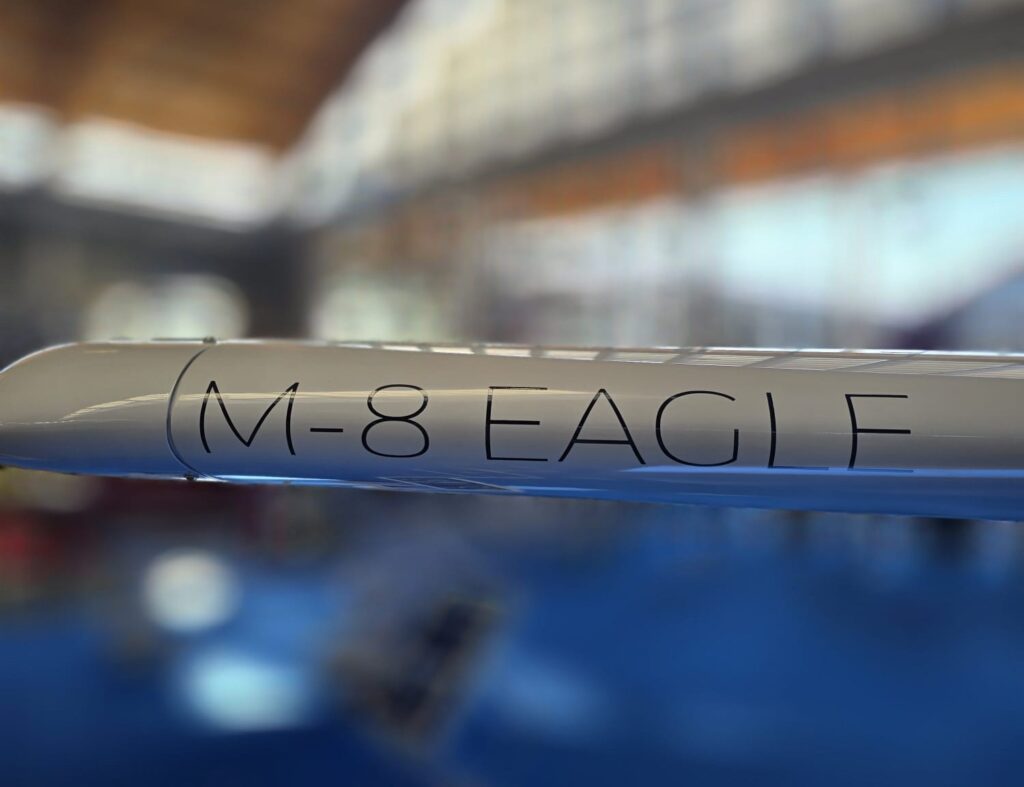
The M‑8 EAGLE prototype made its maiden flight in 2018, becoming the first aircraft of Orličan’s modern era. This milestone symbolically reconnected the company with the long tradition of Czech aircraft manufacturing and confirmed the brand’s return to in‑house development. The successful flight opened the door to further projects and the technological growth of the company.
6. 3. 2018
On 23 February, an exclusive license agreement was signed for the production and sale of the AL600 ultralight aircraft prototype, completing the effort to secure an in‑house product.
2018
A new company, ORLIČAN s.r.o., was established, continuing the long tradition of aircraft manufacturing in Choceň. Production focused primarily on composite components for Schempp‑Hirth gliders. Racing driver Václav Bervid became the new CEO.
2014
The Seagle kit No. 03 was completed; the aircraft is currently flying in South Africa under the registration ZU‑SEA.
2009
On 3 January, the company Schempp‑Hirth, výroba letadel spol. s r.o. was established, with Ing. Pavel Tomana as managing director and owned by Schempp‑Hirth Flugzeugbau GmbH. The company directly continued the “spun‑off” aircraft division of Orličan a.s.
1995
The prototype of the light sport aircraft M7 Ornis was built, with a total of four units produced.
A period followed in which the aircraft division became unprofitable for the then‑owners of Orličan a.s. Its director famously declared: “I’ll bulldoze the aircraft production over the fence.” And that is exactly what happened.
1994
Orličan n.p. was dissolved and Orličan a.s. was founded (1991–2009). The aircraft division was separated and, in cooperation with the German company Schempp‑Hirth, continued the production of gliders.
1991
The company shifted its main focus to the production of refrigerated and insulated trailers, with up to 90% of output exported to the USSR. Among the most notable types were the N10 CH and N7 CH.
60. až 80 léta
Production of the HC‑4 helicopter prototype began. Due to orders from higher authorities, the project was never completed. The unfinished HC‑4 prototype is now displayed at the Kbely Aviation Museum.
1967
Refrigerated transport vehicles became the main production program of Orličan in Choceň. After nearly 30 years, powered aircraft production came to an end, leaving only glider manufacturing in operation.
1960
Powered aircraft production came to an end. The company now focused exclusively on gliders.
1959
On 27 May, Lubomír Šťastný — one of Orličan’s most dedicated employees, a holder of multiple speed records, and the head of the Choceň Aeroclub — was killed in Egypt while training military pilots on the L‑60 Brigadýr.
1957
The company was renamed Orličan n.p. Production of the modernized VT 425 Šohaj 3 began, and in June the third prototype of the L‑60 — in the refined configuration known today — completed its test flights. This period also marked the start of refrigerated and insulated body production, later expanding to full trailer manufacturing, with a strong export focus on the USSR.
1955
Jaroslav Mráz died of lung cancer, having no remaining ties to the company. Although he helped many people escape Nazi persecution during the war, he was falsely accused of collaboration after its end. He was later fully cleared of all charges, yet never returned to the company’s leadership. His only “offence” had been his success as an entrepreneur.
1953
Two M‑1 Sokol aircraft, OK‑AHN and OK‑AHK, undertook a renowned promotional flight from Prague–Ruzyně to Cape Town and back. One of them, OK‑AHN, can be seen today in the National Technical Museum.
1947
The M‑1 Sokol made its maiden flight. This all‑wood, two‑seat low‑wing aircraft with retractable landing gear became a symbol of post‑war Czechoslovak aviation.
80 years since the first flight of the legendary M‑1 Sokol aircraft
9. 3. 1946
On 9 May, the Choceň factory was heavily damaged by the explosion of a parked munitions railcar. Later that year, on 27 October, the Ministry of Industry issued Decree No. 155/1945 nationalizing the company Ing. Mráz, továrna na letadla. Designer Zdeněk Rublič assumed leadership, and the enterprise was placed under national administration as Ing. J. Mráz, továrna na letadla – národní správa.
1945
 Executed: Alois Aubrecht, Ludvík Kodýtek, Miroslav Ell, Jaroslav Mikulecký, Josef Bíca
Fallen on the Fronts: Josef Jiráský, Josef Kramář
Fallen during the revolution: Milouš Peřina, Emil Plecháč, Karel Němec
Commemoration of Employees Fallen in World War II
After the occupation, the Choceň aircraft factory was incorporated into the German war economy. Its name was changed to Flugzeugfabrik Chotzen (later also Flugzeugwerke Chotzen). Although Ing. Jaroslav Mráz formally remained listed as the head of the company, operations were directed entirely according to German requirements.
1940-1945
Ing. Jaroslav Mráz and Ing. Pavel Beneš agreed to end their partnership, and Ing. Beneš left the company.
August 1940
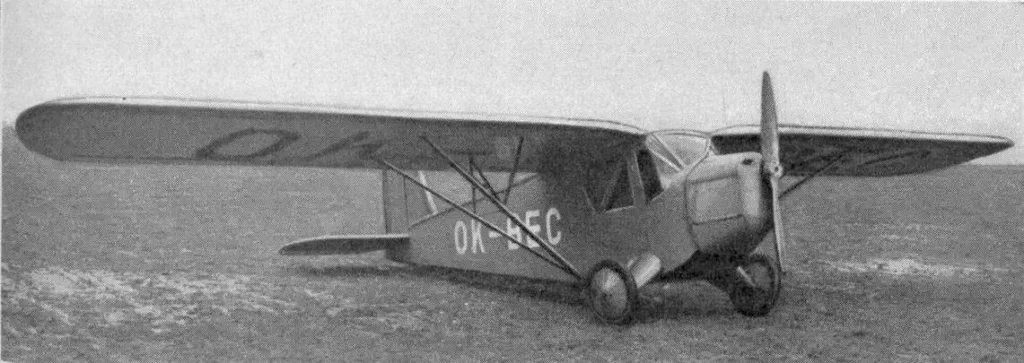
The Be 60 Bestiola, a high‑performance all‑wood single‑engine high‑wing aircraft, made its maiden flight — becoming one of the most successful designs of its class. In September 1935, the aircraft OK‑BEA took part in the National Flight of the Czechoslovak Republic, where the crew F. Kládek and Dr. Rückl achieved sixth place.
In 2016, Ing. Petr Tax built a flying replica of the Be 60 Bestiola, carrying the original registration OK‑BEC. It is on display at the Metoděj Vlach Aviation Museum in Mladá Boleslav.
10. 7. 1935
The company Beneš–Mráz was founded in response to the lingering economic crisis, the growing threat from Germany, and the shortcomings of Czechoslovak aviation. It was established by renowned aircraft designer Ing. Pavel Beneš together with successful industrialist Ing. Jaroslav Mráz, who owned a thriving refrigeration‑equipment factory in Choceň.
1. 4. 1935