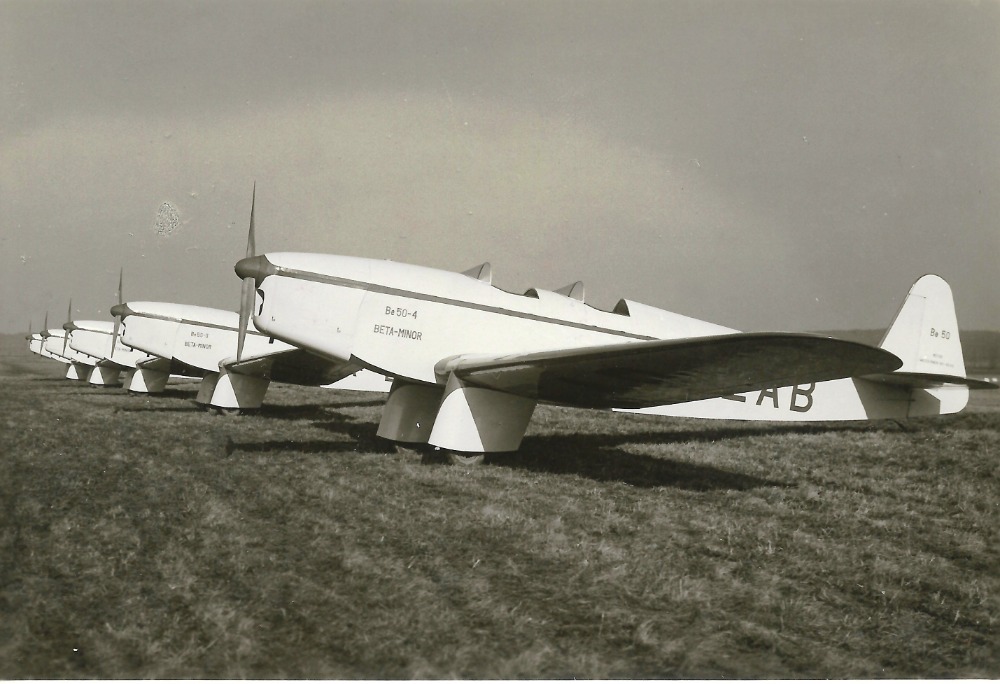
Jiří Mráz was the son of Jaroslav Mráz — entrepreneur and co‑founder of the Beneš–Mráz aircraft factory (renamed Orličan in 1955), which played a significant role in shaping Czechoslovak sport aviation in the 1930s. Jiří grew up in an environment where precision, responsibility, and technical discipline were taken for granted. These values shaped his entire life — a life through which he contributed to the fight for our freedom.
Journey to England
The German occupation in 1939 interrupted his studies and prevented him from completing his final exams. With the help of his father, however, he managed to escape from the Protectorate to England, where he finished his education and joined the Czechoslovak foreign army.
In early 1943, he was assigned to the 310th Czechoslovak Fighter Squadron of the RAF. Due to a vision defect he could not serve as a pilot, and so he worked with the unit operating Spitfires equipped with photographic reconnaissance equipment. He served in France and the Netherlands before being transferred back to England in March 1945, where he entered officer training and the RAF meteorological course. He also took part in the Normandy landings — one of the largest Allied operations of the Second World War.
After the war: a life in the background
After the war, Jiří Mráz returned to Czechoslovakia, where a difficult period awaited him. His father’s factory had been nationalised, the family was involved in legal disputes over property, and they faced the serious illness of Jaroslav Mráz, who died of lung cancer in 1955. Jiří struggled with the authorities, who evicted him from the Bratislava apartment he had moved into after his wedding, and he found it difficult to secure work that matched his qualifications.
“An RAF officer with a university education surely imagined a different life after the war,” historian Jiří Klůc wrote in a public tribute to Jiří Mráz.
In 1967, he emigrated to the United States, where he remained for the rest of his life. He lived outside public attention and died on 20 February 2024 at the age of 101 — one of the last surviving Czechoslovak members of the RAF. In the Czech Republic, he remained virtually unknown.
A legacy that inspires
We remember the story of Jiří Mráz because it carries the same values that shaped Orličan itself — finding one’s own path despite circumstances, respect for craftsmanship, and the willingness to take responsibility. His decision to leave an occupied country, rebuild his life abroad, and in unfamiliar surroundings seek a way to contribute to the fight against fascism speaks to the spirit in which he was raised.
His legacy — attentiveness to the world, belief in freedom, and the determination to take an active part in shaping one’s surroundings — is a value shared by all those who form the story of Orličan.
Honour to his memory.
Sources:
Jiří Klůc – public tribute to Jiří Mráz (2024); Imperial War Museums (Public Domain); The National Archives UK – RAF Personnel Records; Military History Institute Prague; Memory of Nations; archival materials on the Beneš–Mráz / Orličan factory.