Flight characteristics that support training
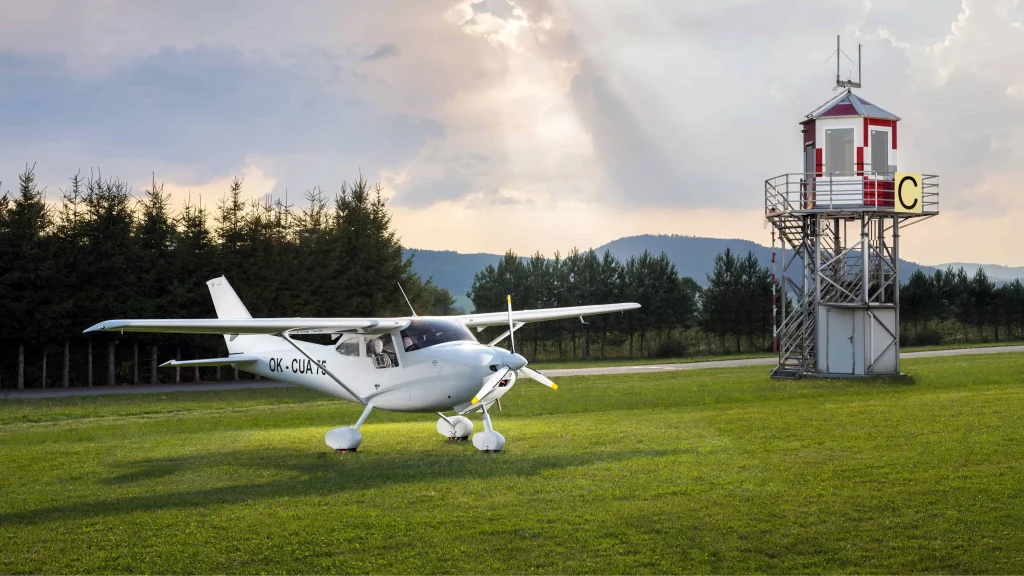
The M‑8 EAGLE is defined by stability. The aircraft responds predictably, with no tendency to surprise the pilot. This is essential in ab‑initio training, where students are learning basic control inputs and need an aircraft that forgives mistakes while still reinforcing precise habits.
Its stall behaviour is benign, with clear aerodynamic cues and intuitive recovery. Large flaps with 15°, 30° and 40° deflections enable short approaches, accurate landings, and training in multiple configurations without adding unnecessary workload.
Instructors also value the cockpit visibility, ergonomics, and natural layout of the controls. The side‑by‑side configuration supports direct communication, immediate access to the controls, and better oversight of the student’s actions. In environments with frequent and intensive flying, this becomes a significant advantage.
One aircraft, many roles
The M‑8 EAGLE is a versatile platform that covers the full spectrum of aeroclub missions. From first circuits to navigation flights, time‑building, recreational touring, or towing. Thanks to its stable behaviour and efficient cruise performance, it is well suited even for longer club trips, where pilots appreciate the comfortable cockpit and ample baggage space.
The aircraft is also prepared for tasks beyond standard training: banner towing, precision‑flying competitions, patrol flights, SAR support, or club‑specific missions. For aeroclubs, this means fewer aircraft types in the fleet and greater operational flexibility.
Operational reality: low costs, high availability
The M‑8 EAGLE is designed to stay in service. Fuel consumption is around 18 litres per hour in training and 14–15 litres per hour in cruise. This allows precise cost planning — a key factor for aeroclubs with high annual utilisation.
Maintenance follows clearly defined intervals: the 25‑hour check typically takes half a day to a full day, the 100‑hour check one to two days, and the 500‑hour check three to five days. There are no hidden or unexpected interventions that would ground the aircraft for weeks. For aeroclubs, this translates into simple scheduling, predictable costs, and high aircraft availability throughout the season.
The strength of standardisation
Operating multiple M‑8 EAGLEs brings benefits that scale with fleet size. Instructors transition between aircraft without adaptation, students train on a single type from their first flight to navigation training, and maintenance works with a unified set of procedures and spare parts. The result is higher efficiency and better utilisation of aircraft in daily operations.
The M‑8 EAGLE was created as a practical operational tool. Its strength lies in simplicity, stability, and the ability to handle everyday training without compromise. It is an aircraft that builds correct pilot habits, reduces operating costs, and offers aeroclubs the reliability they depend on.