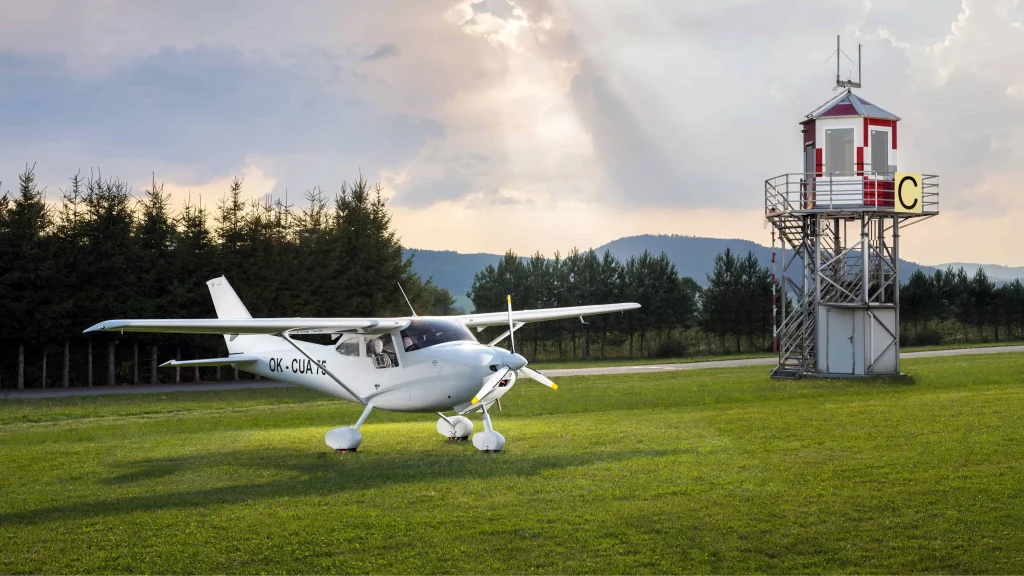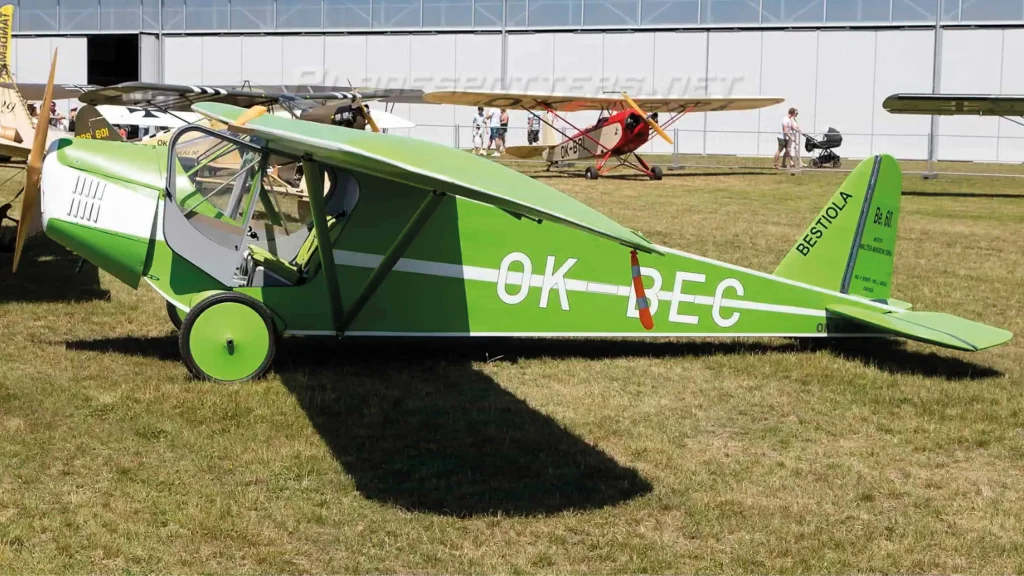
If we go back to the very beginning: what do you consider the key moments in the birth of Czech aviation?
The essential condition for the emergence of Czech aviation — of aircraft heavier than air — were, and still are, people: their enthusiasm and their abilities. The beginnings naturally reach back to the period before Czechoslovakia was founded, from the early stage of “the world has started flying, and we can do it too,” represented by our first aviation pioneers (Kašpar, Laglerová, Holeka, etc.), to the moment when aircraft became a tool of war between 1914 and 1918 (Štefánik, Stanovský, Melč, etc.). But the young Czechoslovak aviation received its decisive impulse after the establishment of the independent Czechoslovak state.
Anyone who has ever “dug” into our history knows that even in this early stage, aviation wasn’t built by orders from above, but through the almost explosive development driven by the personal effort of many people — pilots, soldiers, young aircraft designers and enthusiasts. Listing them all would take at least ten lines to be even remotely fair. Simply put: people were key to the birth of Czechoslovak aviation.
How did Orličan actually enter the history of Czech aviation?
When we hear the name “Orličan” today, it refers to the post‑war name of the historic aircraft factory in Choceň, founded already in 1935 under the name Beneš–Mráz, Aircraft Factory.
During the First Republic, it became famous for producing the Be‑ series of training and sport aircraft, mostly low‑wing designs by Ing. Beneš. He was the first in our country to introduce landing flaps on serially produced aircraft. These were excellent machines, winning numerous competitions of the time and setting several world records in their categories.
Beneš trained an outstanding successor, Ing. Rublič, who later played a crucial role as a designer in Orličan’s post‑war history. His post‑war masterpieces included the legendary M‑1 Sokol, L‑40 Meta Sokol and L‑60 Brigadýr — to name only the most famous. Thanks to these aircraft, the Orličan brand became, at least in Europe, synonymous with modern and progressive sport and light‑aircraft design.
Who were the people who moved Orličan forward the most? And what can we learn from their approach today?
It is difficult, after so many years, to list individuals from Orličan who had a decisive influence on Czechoslovak aviation. Certainly the founder, Ing. Mráz, whose persistence and meticulousness — in the best sense of the word — brought a remarkable aircraft factory to life and kept it running, unafraid to introduce something new.
Also the first chief designer, Ing. Beneš, who, despite his somewhat bohemian and free‑spirited approach, designed excellent light aircraft for the Choceň factory.
His successors, led by Ing. Rublič, turned Orličan’s post‑war production into a European benchmark for sport light aircraft. Rublič’s contribution is highlighted by the fact that he played a key role in designing the most successful Czechoslovak aircraft of all time — the L‑29 Delfín.
But the question is inevitably a bit unfair. Where is the space to name and describe the contributions of prototype‑shop technicians, draftsmen in the design office? Where are the test pilots, demonstration pilots and competition pilots who made aircraft like the M‑1C Sokol famous with long‑distance flights such as Prague–Cape Town–Prague? What about the technologists who developed the thin‑sheet dural riveting technology later adopted in Kunovice, enabling the production of the famous L‑13 Blaník gliders? All of these are topics for separate articles.
From your perspective as someone who knows both the history and the present: what mistakes keep repeating in light‑aircraft development across generations?
It’s difficult for me, as an informed layman, to pass judgment on where today’s light‑aircraft manufacturers “make mistakes,” like the comrades from the GDR, right? Generally speaking, developing and building aircraft today means finding a balance between aviation enthusiasm — without which it doesn’t work at all — and a pragmatic assessment of the possibilities and economic conditions of each individual project.
I’ve seen many cases, especially in the ultralight sector, where creators of a new aircraft, in uncritical conviction that they had come up with something new and unique that everyone would want, completely ignored the second part — and often ended up badly.
Sometimes they even kept secret what they were developing until the last moment, losing the chance for positive confrontation with what already exists and what has already been invented in aviation. Truly professional teams don’t make these mistakes — and from what I know, I believe today’s Orličan team belongs among them.
Unfortunately, professionals today face far more concerns with aviation bureaucracy and the dense thicket of regulations of all kinds — and in this area, mistakes are made very easily, often even unintentionally.
Looking from history into the future: what trends will shape European sport aviation in the next decade?
I would need a crystal ball to answer precisely where European sport aviation is “heading” today. In my view, two opposing trends are clashing: one pushing toward greater individual freedom to fly, and the other — institutionalisation and bureaucratisation by states and bodies such as the EU — aiming to control and restrict access to this beautiful hobby. Which trend prevails depends partly on us — on citizens who may or may not allow this freedom to be taken away.
As for technical trends, there are several. Let me quote from an almost twenty‑year‑old interview with the late doyen of Czech aerobatics, Jiří Kobrle, whom I had the honour to interview at the Czech Aerobatic Championship in Toužim:
“Today (2007), everything that flies aerobatics is at least ten or more years old. What will replace the SPORTSMAN and INTERMEDIATE category aircraft once the current Zlín models reach the end of their aerobatic lifespans?"
That’s the question! It’s partly about economics. The next aircraft for basic aerobatic training should be something that sells well. I have an idea. Today there is a boom in ULLa and LSA aircraft. I can imagine that in the future, LSA aircraft could gradually evolve to a version that, thanks to new materials and technologies, would allow pilots to train basic aerobatics safely — and at a relatively low and accessible cost, including regular practice flights.
It’s no secret that at the 2005 ULL World Championship in France, German pilots demonstrated almost full aerobatics in the C‑42 Ikarus ultralight during the closing ceremony — without any technical issues, under the quiet observation of several European aviation authorities and the FAI. Of course, legislation doesn’t allow this today, but in time — who knows?
Even in the Czech Republic, there was an ultralight aircraft — the FRESH, built by TL‑Ultralights — that was technically capable of full aerobatics. So technically and economically, it is possible.
We’ll see what the future brings, because the problem today lies nowhere else but in the ‘offices’. And a new aerobatic aircraft is needed in the Czech Republic — the old Z‑142, Z‑526 and even the Z‑50M won’t be here forever. And with them, unfortunately, the human base of Czech aerobatics could disappear if there is nothing to train on.
What would you advise the new generation entering aviation? An industry built on people needs continuity, how do we support young talent?
Above all, they need determination and the will to overcome all the challenges they will encounter along the way. I don’t want to moralise, but most of those challenges will come from within themselves. In today’s fast‑paced world of “experiences because I want them,” it’s not easy to maintain the long‑term commitment needed to achieve something step by step, with considerable effort — including financial effort.
So I wish them plenty of enthusiasm — or a mentor, or wonderful parents who share their interest in aviation and will inspire them and help them reach their goal, whether that’s flying itself or working in aviation in various roles.
Finally, as someone who has observed and documented Czech aviation for decades, what still fascinates you about it?
This last question actually closes the circle of your topics. And my answer is almost the same as at the beginning. People — Czech people in aviation — they fascinate me again and again. Those who have already achieved something, and those who are just preparing to.
You know, I recently gave several talks to second‑ and third‑grade children at a library in Prague on the topic “Why does an airplane fly?” We met four times, and each time I was surprised by how much such young children knew about flying. I had to switch from lectures to a discussion format. Even children that young knew what lift is, why an airplane has wings, and how and why it is controlled by rudders and flaps.
Yes, it was a school for gifted children, with no more than twenty pupils per class and two teachers — but it still made me very happy. And because of children like these, I am not worried about the future of Czech aviation.