What are Orličan’s main strategic priorities today, and how have they evolved since the company’s revival in 2014?
When we brought Orličan back to life in 2014, our first goal was to stabilize the company, restore technical capabilities, and reconnect with the brand’s tradition, which has a strong reputation in both Czech and European aviation. At that time, the key priority was to return the company to a regular production rhythm and reintegrate it into international projects.
Today, our strategy is gradually moving forward. Alongside long‑term cooperation with renowned partners such as glider manufacturer Schempp‑Hirth or aircraft producer Diamond Aircraft, we want to further develop our own projects and technologies. Orličan’s ambition is to become not only a reliable manufacturing partner, but also a company that brings its own technical solutions and its own aircraft to the market.
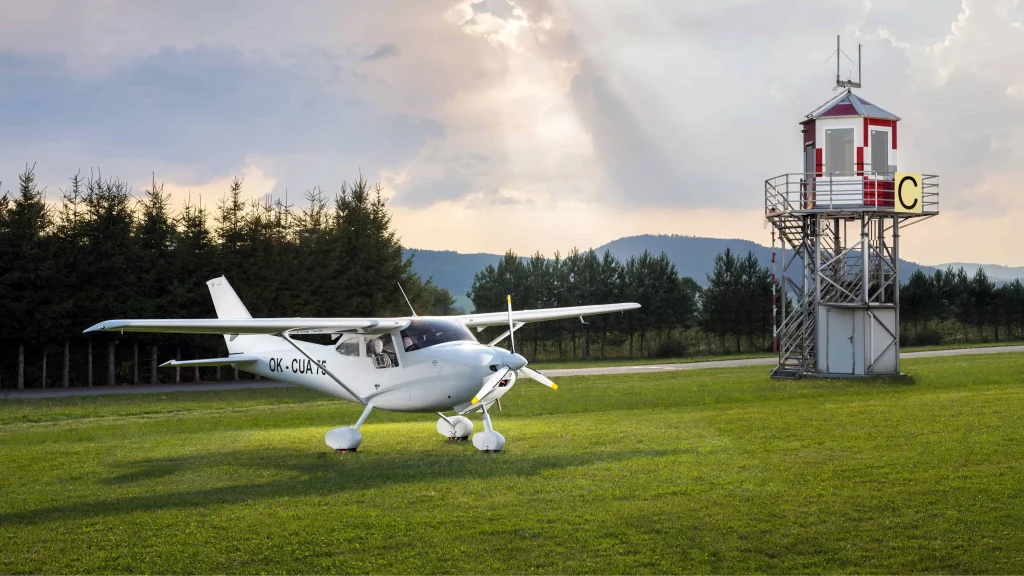
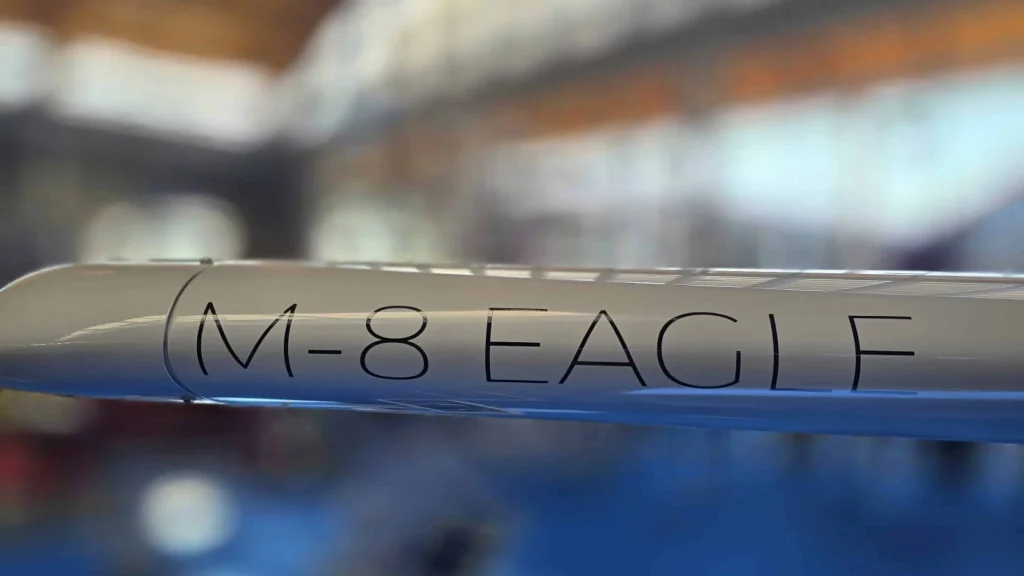
The M‑8 EAGLE is currently the company’s most visible project. What was the most challenging part of its development, and what surprised you the most?
Developing an aircraft is always a complex process that combines design, manufacturing, testing, and the economic aspects of the project. In our case, it was carried out by a relatively small team and during the COVID‑19 pandemic, which made the entire process significantly more difficult.
On the other hand, a very positive moment was the reaction of pilots and customers during the first presentations. We designed the M‑8 EAGLE as a modern yet very intuitive aircraft for the pilot. When you hear experienced pilots say that the aircraft “behaves exactly as they expected,” it is a very powerful moment for the development team.
The Czech aviation industry is experiencing growth and international success. Where do you see the biggest opportunities for small manufacturers like Orličan?
Czech aviation has an exceptionally strong tradition and technical culture. This is something that has been built over decades and continues to deliver results today.
For smaller companies, flexibility is key. Large corporations have enormous capacities but also very complex structures. Smaller manufacturers, on the other hand, can be fast, innovative, and able to respond to new technological directions. If we manage to combine the experience of the older generation with the energy and new technologies brought by young engineers, this combination can become one of the strongest competitive advantages of Czech aviation.
How do you expect demand for light and sport aircraft to develop over the next ten years?
Light aircraft hold a very stable position in aviation. They are a fundamental tool for pilot training and at the same time represent the most accessible form of personal flying.
In the next ten years, I expect continued modernization of this segment. Aircraft will become more technologically advanced — with modern avionics, more efficient engines, and gradually also elements of electrification. At the same time, it will remain important to preserve simplicity, reliability, and affordable operation. This is where light sport aircraft have a major advantage.
Orličan is also involved in the development of unmanned platforms, such as the RoboCopter. How significant will drones be in the company’s future portfolio?
Unmanned systems are currently one of the fastest‑growing areas of aviation. For us, they represent a technological opportunity — they allow us to work with new principles of control, automation, and digital integration.
At the same time, Orličan remains a company historically connected with classical aviation. We therefore see unmanned systems as a complement to our portfolio, not as a replacement for piloted aircraft.
What do you consider Orličan’s greatest competitive advantage compared to other European manufacturers?
Our greatest advantage is the combination of experience and flexibility. Orličan is a company with a very deep aviation history, yet with a relatively compact structure.
This allows us to make decisions quickly, adapt to projects, and search for technical solutions without complex corporate processes. In aviation — where know‑how is often more important than the size of the company — this is a very significant factor.
How do you approach generational change within the team, and how do you support the transfer of know‑how between experienced designers and young engineers?
Aviation know‑how is not passed on only through documentation, but above all through personal experience. That is why we strive to create an environment where people with long‑term practice and the younger generation work together.
Younger colleagues bring new technologies and digital tools, while the older generation has deep practical experience in aircraft design and manufacturing. When these two perspectives come together, the result is often very high‑quality technical solutions.
If you had to choose one moment that best captures the current era of Orličan, which would it be and why?
For me personally, it is the moment of the first flight of a new aircraft. It is the moment when years of work by designers, technicians, and the production team come together.